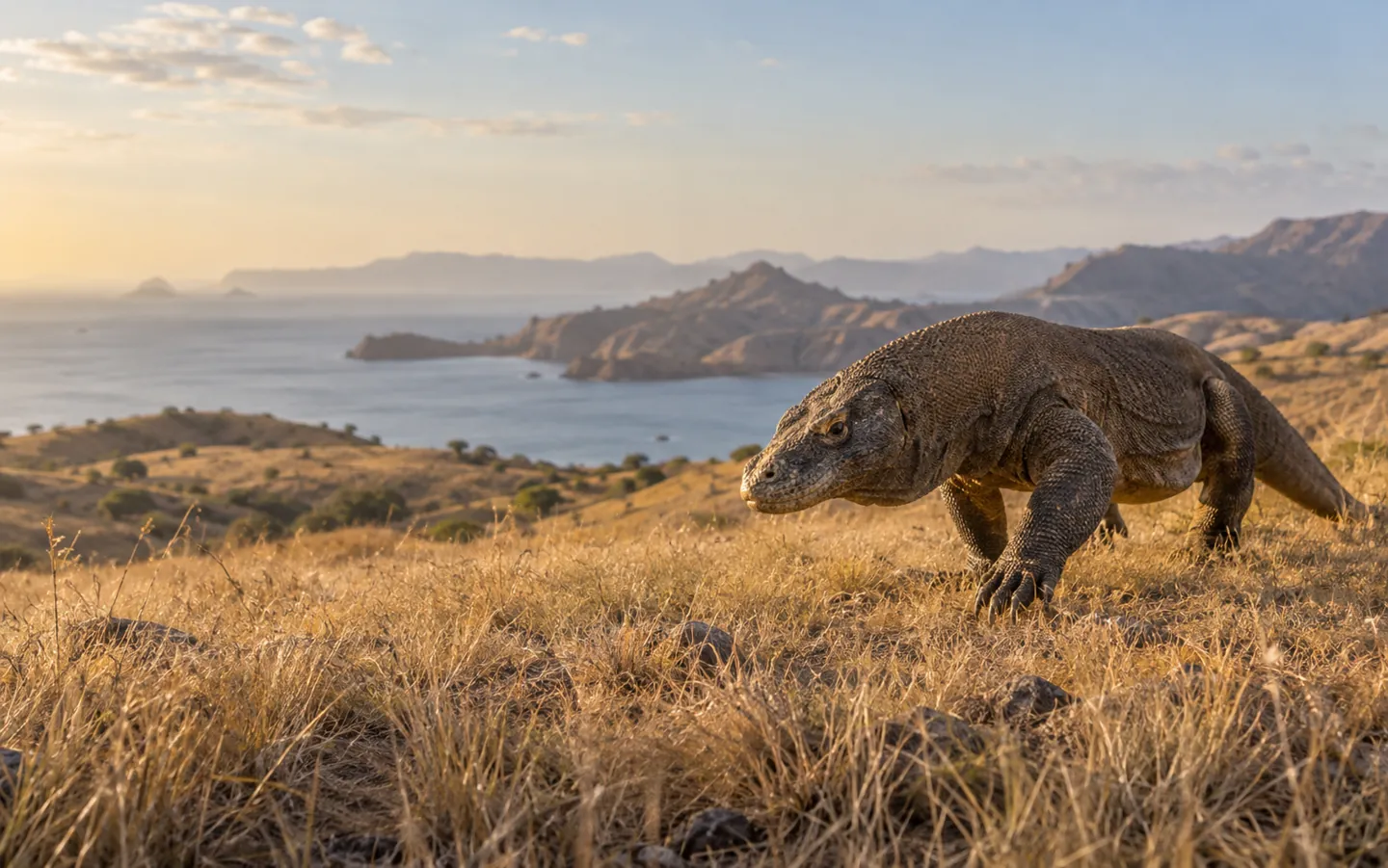
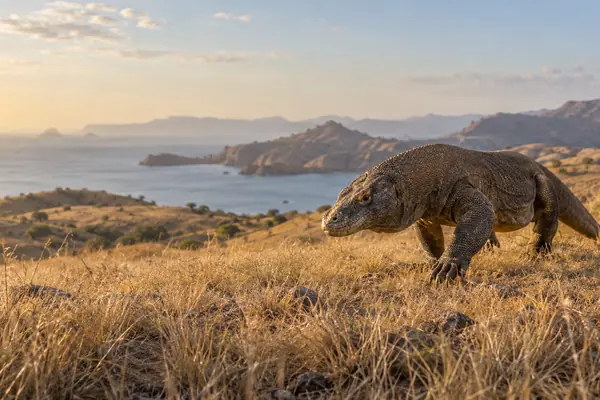
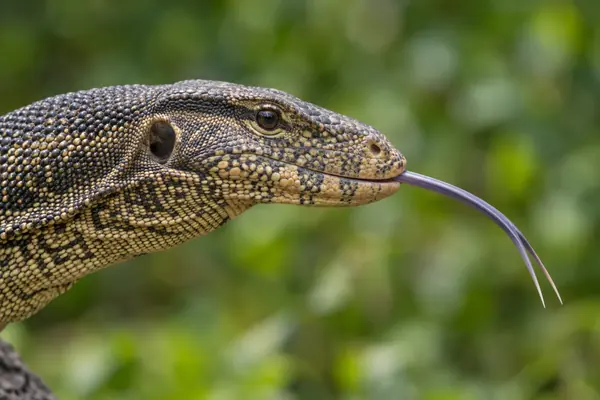
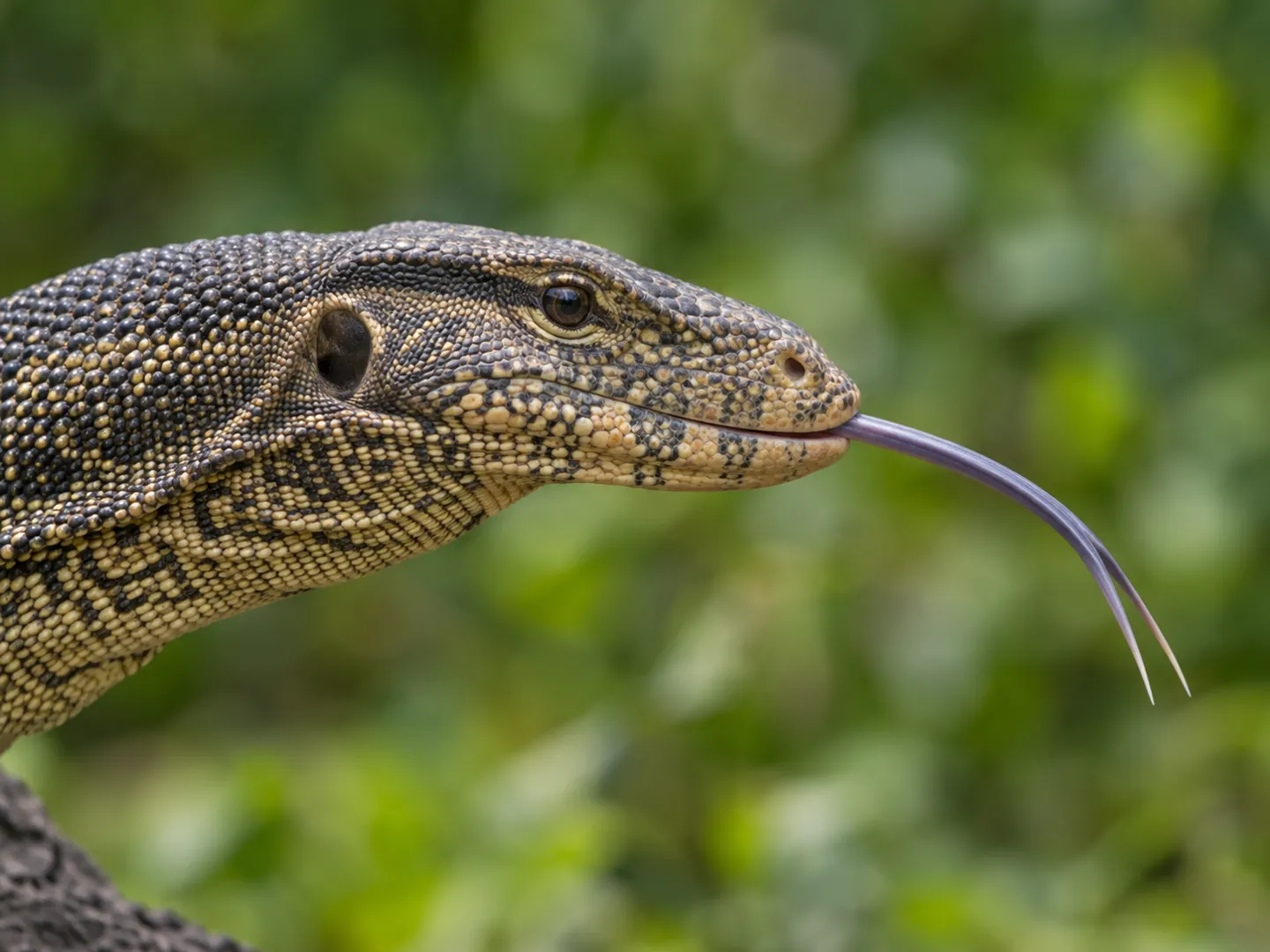
Monitor lizards live across Africa, southern Asia and Australia. Most share a long neck, strong legs and a snake-like forked tongue, and they range from about 20 cm long to the 3 m Komodo dragon.
Pick a monitor lizard to see its typical full length, including the tail. The bar shows where it sits in the family's size range.
Lengths from Encyclopaedia Britannica and the South African National Biodiversity Institute.
TWO NUMBERS WORTH KNOWING
A big lizard, a small population.
One figure for how many Komodo dragons remain, one for what rising seas could take.
under 1,400
Adult Komodo dragons left in the wild
In 2021 the IUCN moved the Komodo dragon from Vulnerable to Endangered. The NHM reports fewer than 1,400 adults remain, in a range of about 809 km².
POPULATION · NATURAL HISTORY MUSEUM
up to 71%
Habitat that could be lost in the most extreme predictions
The dragons mainly live in low-lying savannah. The NHM says rising seas and warming temperatures could, in the most extreme predictions, take up to 71% of their habitat.
HABITAT · NATURAL HISTORY MUSEUM
Populations inside Komodo National Park are thought to be stable, the NHM reports, while unprotected populations on Flores, which hold over half the occupied habitat, are at ongoing risk.
FOUR KOMODO FACTS
How the biggest monitor lives.
These come from the Smithsonian's National Zoo and the Natural History Museum.
A nose for a meal
Komodo dragons can smell carrion up to 4 km (2.5 mi) away and can briefly run at 16 to 20 km/h.
A venomous bite
Their saliva carries bacteria plus venom that prevents blood clotting. Bitten prey usually dies within a few days.
Huge meals
An adult can eat up to 80% of its body weight in one meal, from deer to water buffalo.
Long odds for hatchlings
Females lay around 30 eggs, of which roughly 20 hatch, and typically only two hatchlings reach adulthood.
AI-generated image, not a photograph of a real person or place.AI-generated image, not a photograph of a real person or place.
NESTS IN TERMITE MOUNDS
A borrowed incubator.
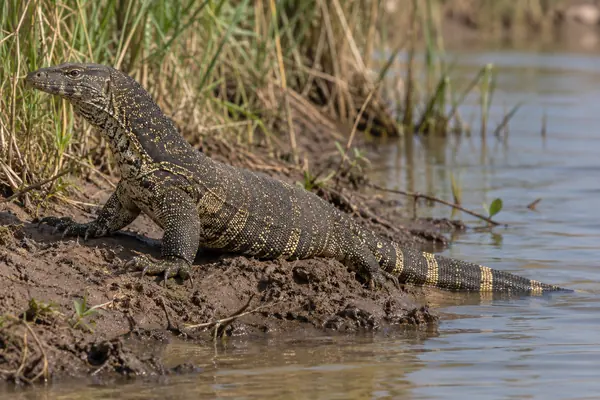
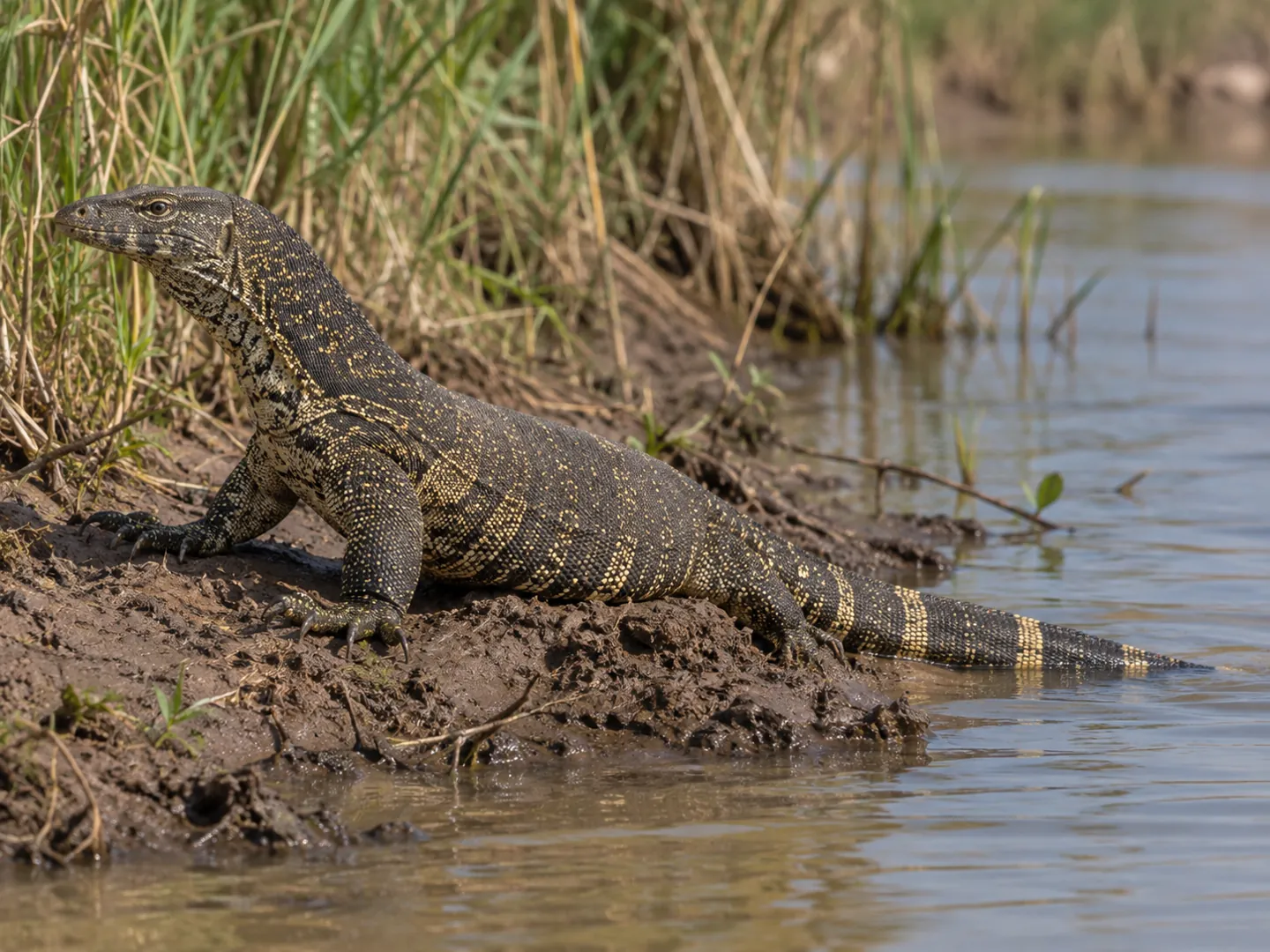
SANBI says female Nile monitors prefer termite mounds for nesting. They tear one open, often in the rainy season when the walls are soft, and lay up to 60 eggs inside.
With fairly constant temperature and humidity, the eggs take 6 to 9 months to hatch. The young eat insects, spiders and snails, and reach maturity in three to four years.
Questions
Questions people ask
How many kinds of monitor lizard are there?
Britannica says about 50 species of Varanus are recognised. The family also includes the earless monitor of Borneo, which is placed in its own subfamily.
What is the biggest monitor lizard?
The Komodo dragon, at about 3 m according to Britannica. The Smithsonian's National Zoo says the largest verified specimen was 3.13 m long and weighed 166 kg.
What do monitor lizards eat?
Almost all are carnivores, eating large insects, spiders, other lizards, small mammals and birds. Britannica notes two Philippine species also eat fruit, and one eats mainly fruit.
Is the Komodo dragon endangered?
Yes. The IUCN moved it from Vulnerable to Endangered in 2021, and the Natural History Museum reports fewer than 1,400 adults remain.
Where do Komodo dragons live?
Only on a few islands of the Lesser Sunda group in Indonesia. The Smithsonian's National Zoo names Rintja, Padar, Flores and Komodo, noting none have been seen on Padar since the 1970s.